
Photography
Three libraries, each with one job. The visitor arrives mid-crisis, so the photography acknowledges that before it promises anything — and then it turns.
The turn: before and after
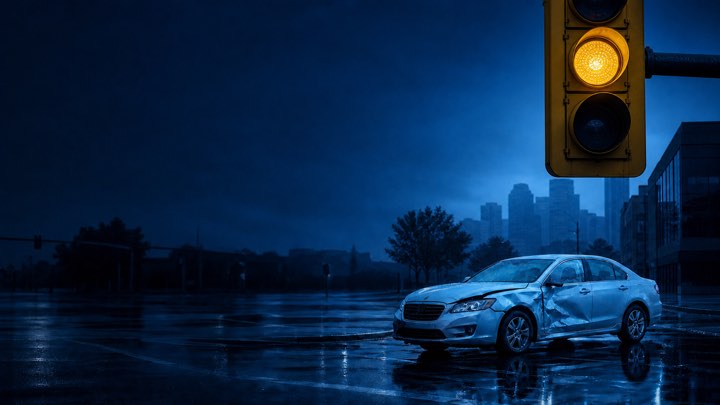
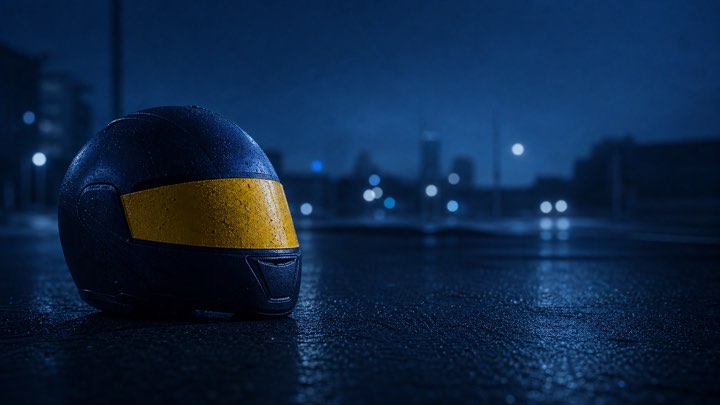
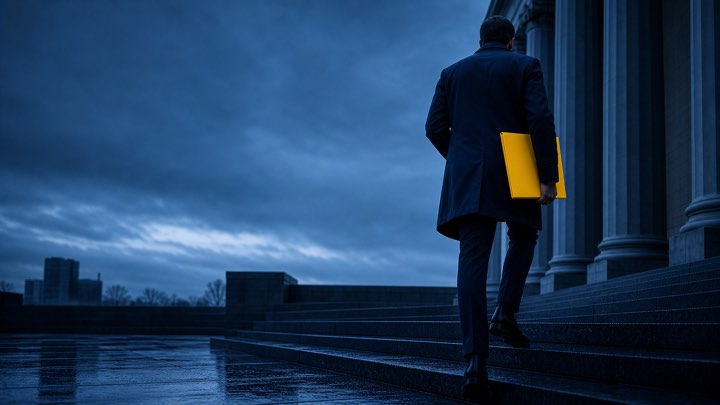
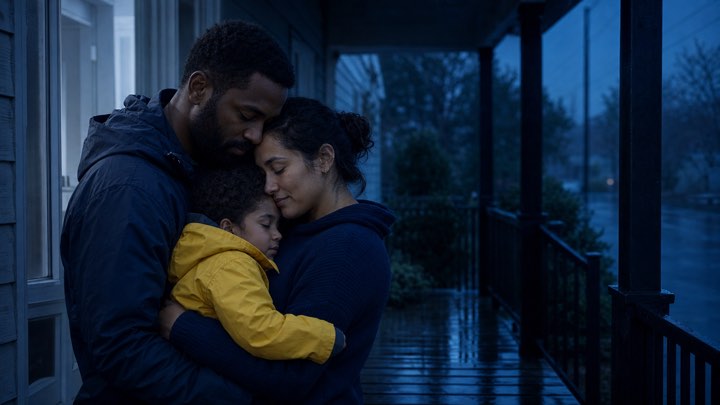
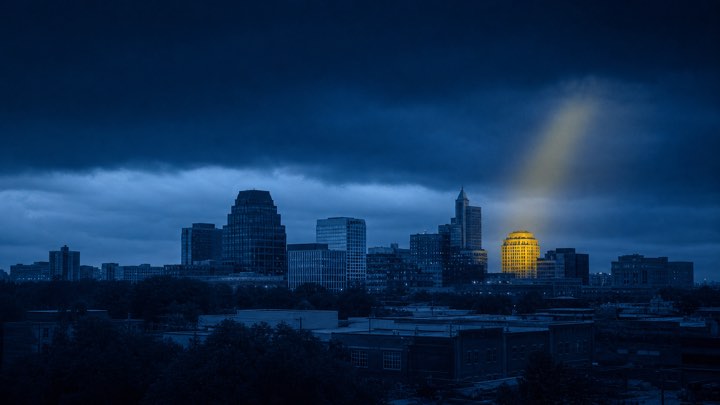
The portrait set is the brand's central image and it is built in matched pairs: the same person, the same car, the same skyline — under a storm on crutches, then at sunrise, standing straight, in yellow. The before is honest about the day the reader is having; the after is the promise. A page opens on the first and moves to the second, and a before image without its after is only half a decision.
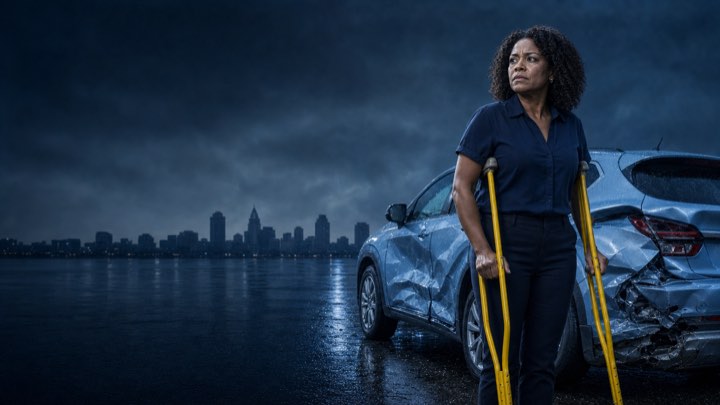
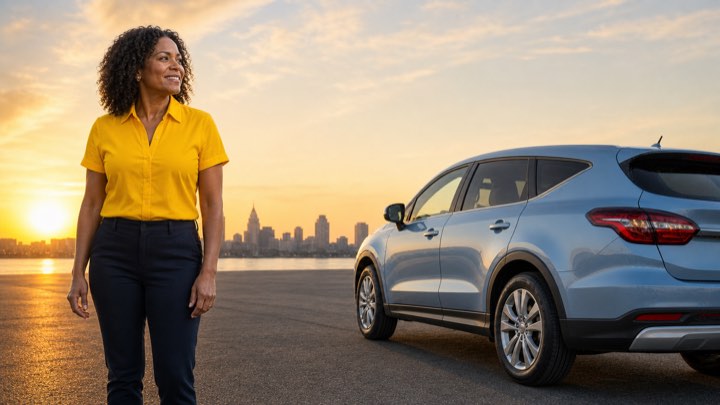 Before After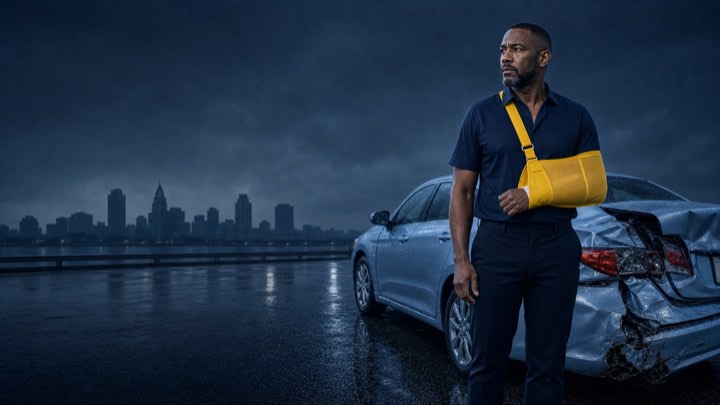
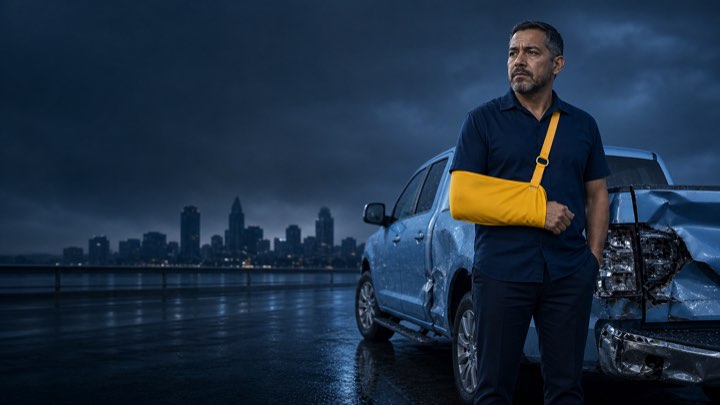
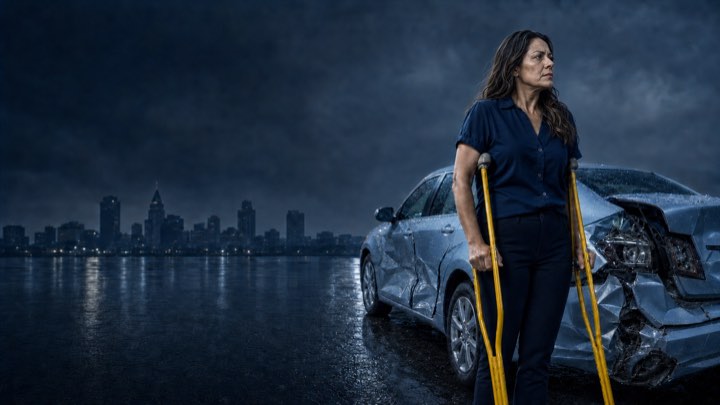
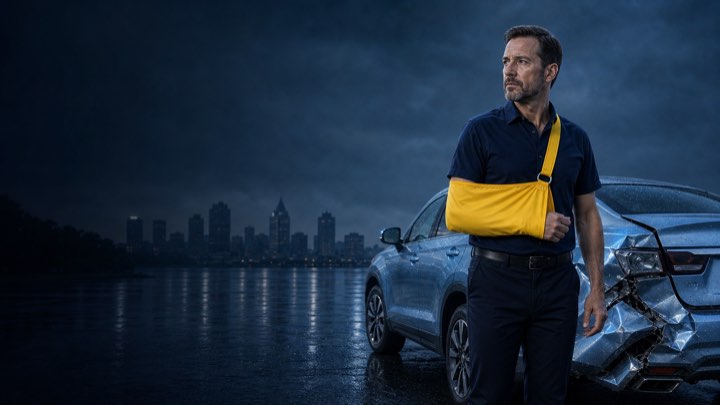
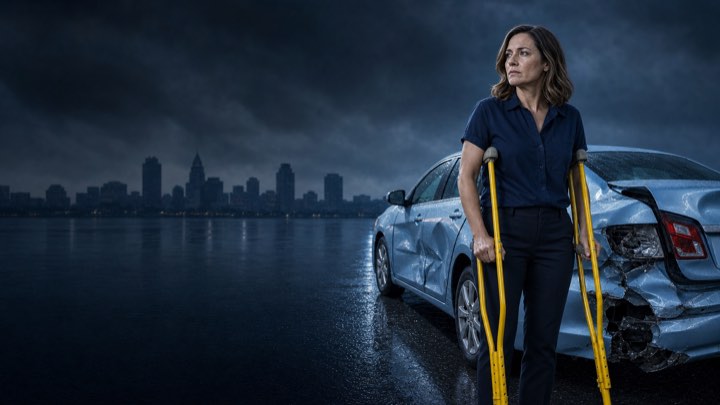
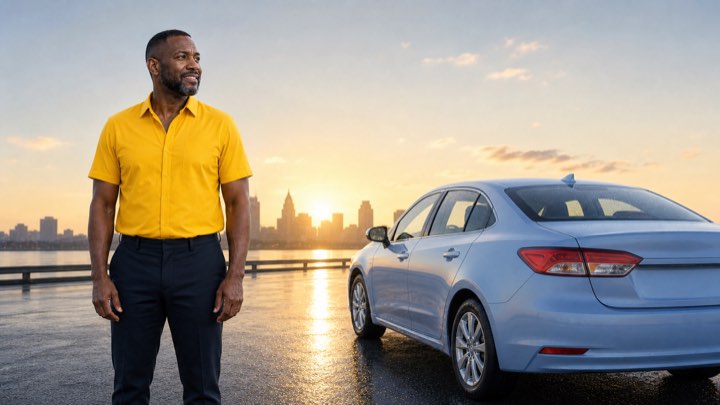
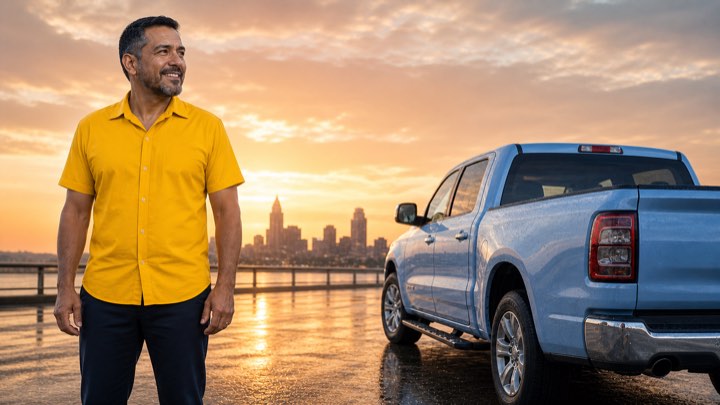
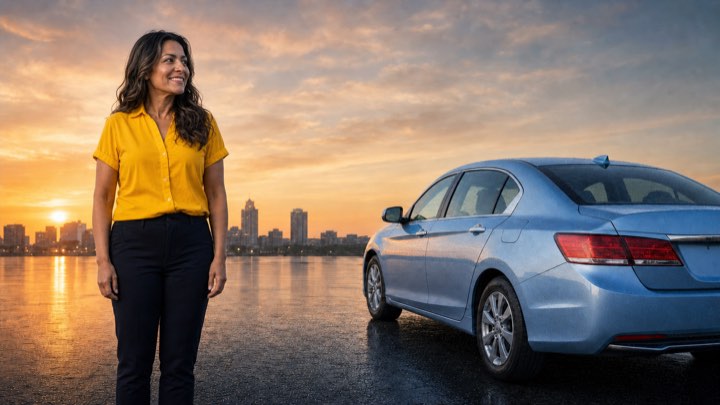
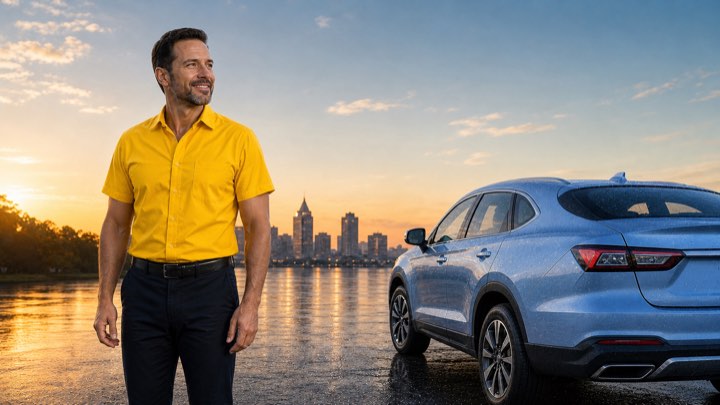
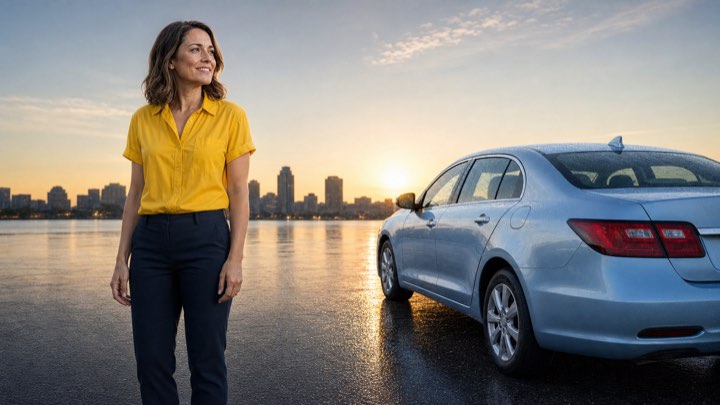
What each state must contain
New pairs are shot to this contract, so any before can turn into its after and the seam still reads.
| Element | Before | After |
|---|---|---|
| Person | Same person, visibly hurt or burdened — crutches, sling, brace. Facing the camera or off it, never smiling. | Same person, standing straight, unaided, looking forward. Relief, not celebration. |
| Wardrobe | Navy or dark neutral. | The brand's yellow. This is where the accent enters the photograph. |
| Vehicle or object | Damaged. The evidence is in frame. | The same vehicle, repaired or replaced. |
| Weather and light | Storm, dusk, wet ground, city dark. | Sunrise or golden hour, dry ground, same skyline. |
| Composition | Person on one side, vehicle on the other, subject in the upper two-thirds. | Mirrored: person and vehicle swap sides. The horizon stays level with the before. |
| Frame | 16 : 9, delivered as a pair with a shared index (NN-…-sad, NN-…-happy). Never one without the other. | |
Campaign
Scene photography for practice areas and location pages. Always behind a scrim — never as a bare background under text.
Attorneys
Cut-out portraits on a cream plate, set object-fit: contain so the crop never clips a head. This is the one place in the system where an image is not cover-cropped.

Jared Pierce
Attorney

Kess Hendrix
Attorney
Treatment rules
| Rule | Why |
|---|---|
| Text over an image always sits on a scrim | The hero uses a two-layer gradient — horizontal to protect the copy column, vertical to seat the image on the band below |
object-position: center top on cover crops | Faces sit in the upper third; a centered crop decapitates them at narrow widths |
Hover scales to 1.03 over --motion-slow | Slow enough to read as breathing, not as a zoom |
| Photo band media has a navy backing | A transparent PNG or a slow load shows navy, never white |
| No filters, duotones, or color overlays | The palette does the work; tinting a photograph fights it |
Where the files live
What is on this page is not the library. These are viewer-sized derivatives — 720px, JPEG — that exist only so this page renders.
| Asset | Home |
|---|---|
| Full-resolution originals | Ignored media-local/, registered with TimDS by logical key |
| Published record | Committed media.json — public URLs and hashes only |
| Viewer derivatives | public/design-system/photos/ |
npm run timds -- assets add FILE --key LOGICAL_KEY, publish with assets publish, and reference the logical key in source. Development resolves keys from .timds/local-media.json; production resolves them from media.json. Committing a full-resolution image bypasses both.